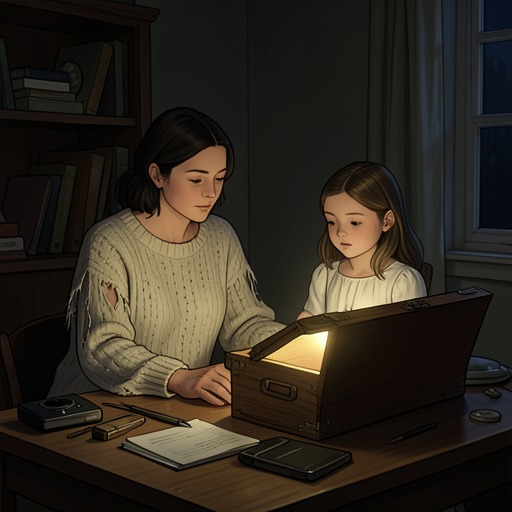
Blake and Daisy
Panic RoomBlake and Daisy’s sisterhood is marked by Blake’s effort to protect Daisy from Lee, the helplessness of watching that effort fail, and a bereavement that remains active in Blake’s choices years later. Daisy’s death at twenty-two becomes both a private loss and the source of Blake’s recurring self-accusation: she believes she did not try hard enough, and later describes herself as having let Lee destroy Daisy before running away.
Concern and powerlessness
Blake saw Lee as profoundly dangerous. She recalls that he drew Daisy into his control and pushed drugs on her; Blake tried to save her, but Daisy did not listen. In Daisy’s eyes, Blake was merely her younger sister, too young to understand. The painful imbalance is central to their relationship: Blake believed she understood the threat, but lacked the authority to make Daisy accept her warning.
Blake’s account connects the family’s vulnerability to their mother’s response. She thinks their mother may also have recognized what was happening, yet did nothing to stop it and drank more so that she would care less. Blake presents this passivity in contrast to her own attempts to intervene. Her concern for Daisy was not simply retrospective: she says she saw what Lee and the drugs he supplied were doing, and witnessed the course those events had taken on the night Daisy died.
Death, grief, and guilt
Daisy’s death did not settle into a memory Blake could control. Blake tries to remember her sister alive, laughing, and full of vitality, while trying to keep buried the memory of Daisy dead at twenty-two. That effort sometimes fails. The contrast between the remembered living Daisy and the death Blake cannot forget gives her grief a continuing, intrusive presence rather than making it a closed episode in the past.
Blake measures her own actions against the loss. She believes she should have tried harder to save Daisy, and later frames the history as having let Lee destroy her sister. Yet her account also makes clear that Blake was young, that Daisy did not heed her, and that Lee had influence over the household. The self-blame is therefore not proof that Blake could have controlled what happened; it is the burden she carries because she saw the danger and survived it.
Their grandmother died about a month after Daisy. She had already been ill, but Blake believes Daisy’s death was what truly broke her. The two losses nearly broke Blake as well. Her grandmother had called her the strong one in the family, and Blake survived, but that survival did not erase her sense of responsibility toward Daisy. The family’s successive bereavements intensify the significance of the sisterly bond: Daisy’s death is not an isolated tragedy for Blake, but the first of closely spaced losses that nearly overwhelm her.
Flight and the relationship’s aftermath
Blake did not go to the police about Lee’s drug dealing, although she believes she could have caused him serious trouble. She feared that the other criminals involved with him would retaliate, and knew that prosecution would not bring Daisy back. Her silence thus combines fear for her own safety with recognition that legal consequences could not undo the loss; it does not mean that she had stopped caring about what Lee had done.
Blake had already obtained a passport using her grandmother’s address and hidden it beneath the floorboards in her bedroom, keeping her plans from her mother. She had been considering escape since Lee entered their lives, but the look Lee gave her one morning made the danger feel immediate. After going into the city centre with college friends on a Saturday, she made an excuse not to return with them, bought a ticket to London, and boarded the next train to Euston. She left alone as night fell and rain continued. This flight followed Daisy’s death and the collapse of Blake’s ability to protect her; it became a lasting source of conflict in Blake’s understanding of her own conduct.
A loss that shapes Blake’s choices
Seven years later, Blake connects the old family disaster to her determination to pursue the questions surrounding Jack Harkness. She recognizes that restoring the Glasson family cannot make her own family less damaged, and thinks of herself as having run away after Daisy’s death. Now she refuses to run from the investigation. Her resolve is not a claim that a new case can repair her relationship with Daisy; it arises from the conviction that she will not repeat the act of leaving in the face of something she believes must be confronted.
As Blake and Don set out for the place she fled, Don notices the tension in her jaw and understands that she is returning to a painful part of her past. Blake is grateful for his presence, though she does not say so. Daisy is not present in this journey, but the history of her death gives Blake’s return its emotional stakes: the sister Blake could not save remains part of the reason she now chooses to stay with a difficult pursuit rather than escape it.